Route km 380 Southeast
Jökulsárlón: worth more than a photo stop
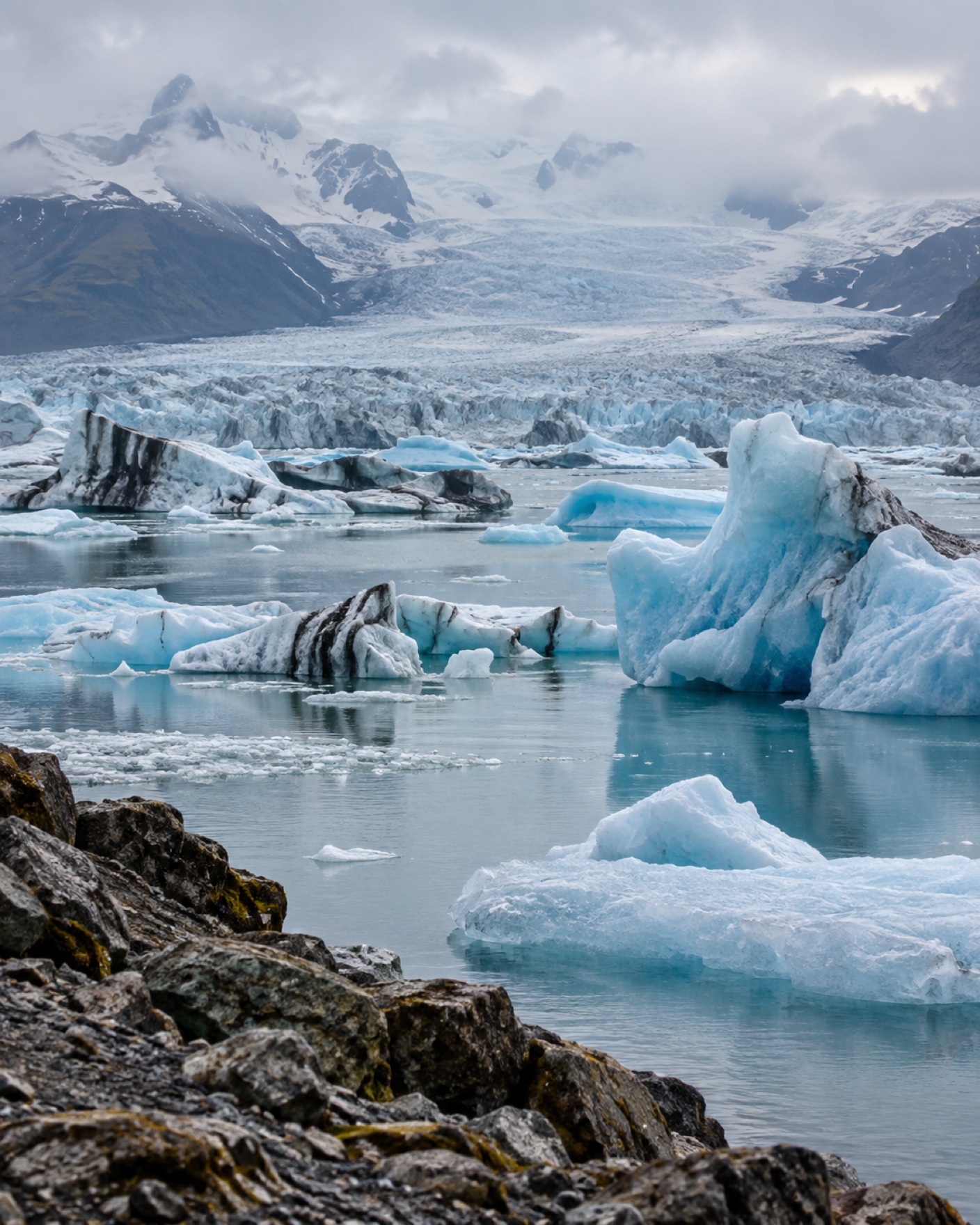
Iceland's deepest lake — around 284 metres — fills with 1,000-year-old icebergs calved from Breiðamerkurjökull. The common first-timer mistake is treating it as a five-minute pull-off instead of the two-sided stop it actually is.
- Minimum stop
- 1.5–2.5 hours
- Route 1 access
- Direct roadside access
- Nearest fuel
- Höfn / Freysnes
- Best window
- Early or late day
Stop logic / 01
Why this changes your Southeast day
Jökulsárlón sits where Breiðamerkurjökull, an outlet of the Vatnajökull ice cap, calves directly into a lagoon that has grown to roughly 18 square kilometres since the 1970s (it was a fraction of that size before the glacier began retreating). The icebergs drifting across it can be centuries old, showing bands of clear, white, and deep blue ice depending on trapped air and pressure history. Seal colonies use the lagoon too, often surfacing close to the shore or the tour boats. None of that is visible from a two-minute roadside glance — the ice needs a slow look to actually register as ice, not just grey-blue water.
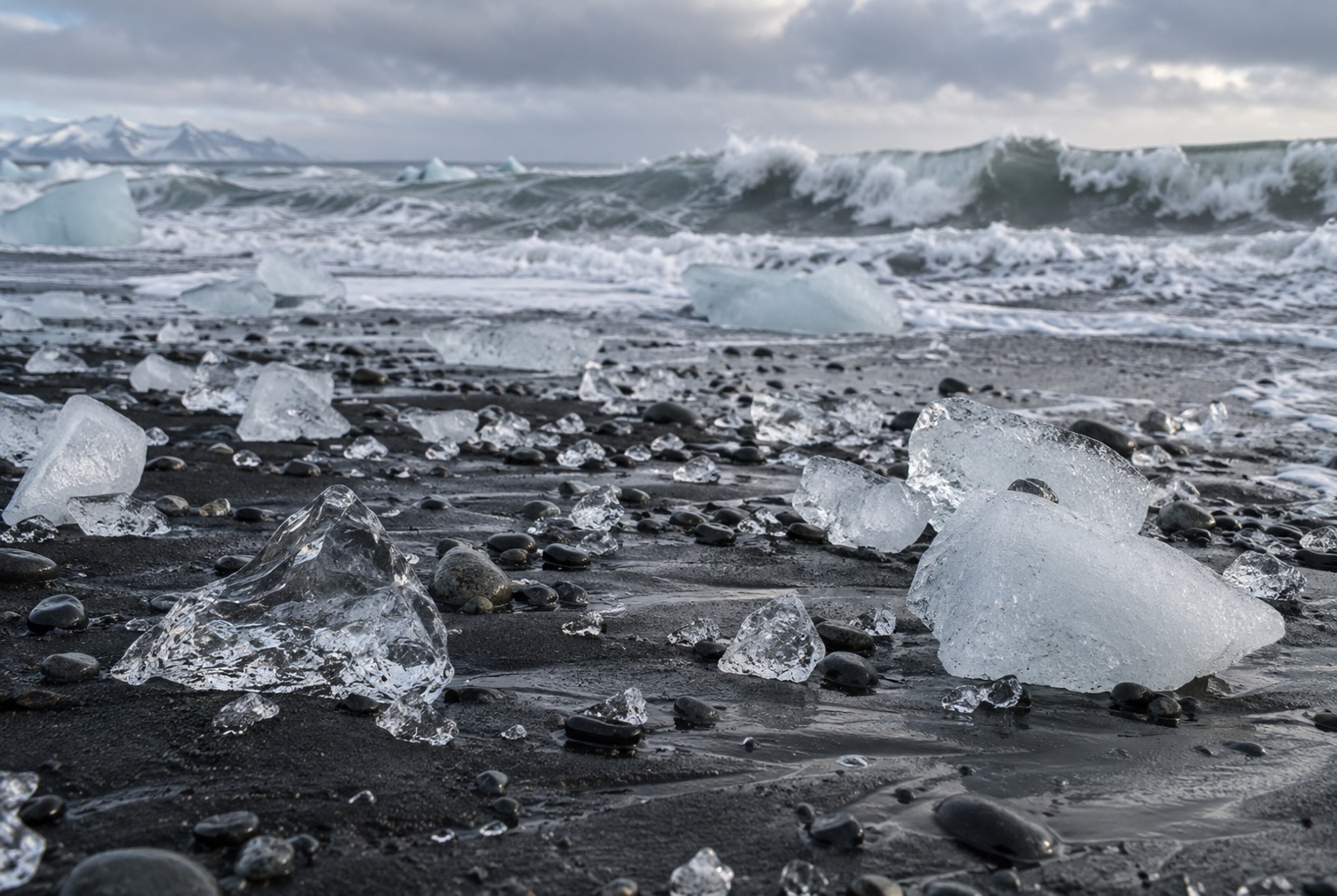
Diamond Beach, the black-sand shore on the ocean side of the Route 1 bridge, is a separate stop in practice even though it's a two-minute walk from the lagoon car park. Ice that escapes the lagoon into the sea washes back onto the sand here, and which side has better ice on a given day depends entirely on the tide and how much has calved recently — check both sides rather than assuming one will disappoint.
Boat tours need their own booking
Amphibian boat tours run in groups of about 20 for roughly 40 minutes and are genuinely worth it for close iceberg views, but they're a separate paid activity with their own schedule — book in advance online rather than assuming a same-day walk-up slot, especially in summer.
Arrival / 02
Two sides, one bridge, one easy mistake
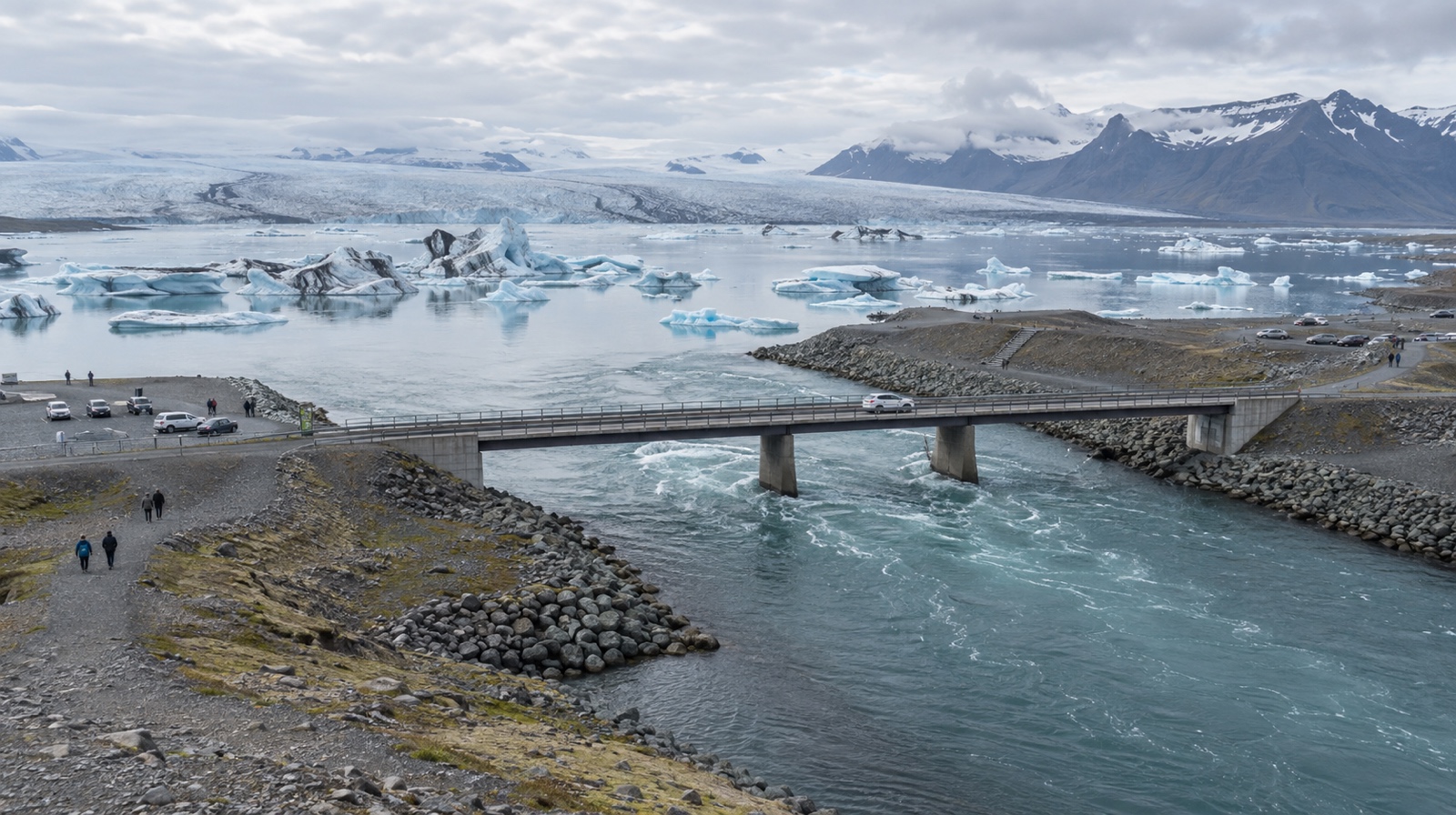
Route 1 crosses the lagoon's outlet channel on a single bridge, with a car park on the lagoon side and a separate car park across the road for Diamond Beach — they are not the same lot, and in peak summer both fill up by mid-morning. Pedestrian traffic crosses near the bridge, so slow down through this stretch even if you're not stopping. Cruise-season days (roughly June through August) bring the heaviest crowding at both car parks; arriving before 9am or after 6pm avoids most of it without sacrificing daylight in summer.
Timing it inside a longer driving day
Coming from Vík or Kirkjubæjarklaustur, Jökulsárlón lands naturally as a midday stop with plenty of daylight left to reach Höfn. Coming from Höfn heading west, treat it as an early stop — leaving it for late afternoon risks a rushed visit if you still have the long Southeast leg back toward Vík ahead of you.
Visit order / 03
A practical order for a first visit
Lagoon shore first
Orient yourself from the main viewing path nearest the car park, 15–20 minutes. This is also where boat tours depart, so it's worth checking the departure board even if you didn't pre-book.
Walk the shoreline
Spend 20–30 minutes walking away from the main viewing point in either direction — the crowd thins fast and the iceberg views change noticeably every hundred metres.
Cross to Diamond Beach
Save 20–30 minutes for the ocean side. Ice fragments here shift with each tide, so it genuinely looks different from the lagoon. Stay well back from the waterline — the surf here carries the same unpredictable-wave risk as Reynisfjara.
Conditions / 04
Why the same stop looks different every visit
Iceberg density and colour shift with recent calving activity, wind direction, and how much ice the tide has pushed back into the lagoon versus out to sea. Overcast days actually show the ice's blue tones better than harsh sun; wind and rain can shut down boat tours with little notice. None of this is predictable more than a day or two out, so treat any specific "best time" advice as a general pattern, not a guarantee, and check current operating status for boat tours directly before you arrive.
Diamond Beach carries real wave risk
The same unpredictable sneaker waves documented at Reynisfjara occur here. Keep well back from the waterline, never turn your back on the ocean, and don't climb on ice fragments near the surf line — they're heavier and more slippery than they look.
Keep moving / 05
Where this leg puts you for the night
Heading east, Höfn is the natural overnight base — a real town with fuel, food, and lodging roughly 75 km on. Heading the other direction, Kirkjubæjarklaustur or Vík cover a westbound stop. Whichever direction, don't plan a same-day push much past either town: the Southeast's long, exposed stretches are a bad place to be driving tired after dark.